Verify a Certificate
Query the authoritative registry to validate hardware authenticity.
The Hidden Risks of Unverified Hardware
Without independent verification, buying high-end hardware is a gamble. We built Assurd Techlabs to eliminate these critical risks.
Severe Thermal Degradation
Standard boot tests don't reveal dried thermal paste or degraded memory pads. Cards that idle fine often hit 105°C+ hotspot throttles under sustained load.
VBIOS Spoofing & Mining
Mining cards are frequently flashed with custom firmware to alter power states, or spoofed to appear as higher-tier models in Windows Task Manager.
Hidden PCB Damage
Missing surface-mount devices (SMDs), liquid damage residue, and failing VRM phases are invisible unless the card is physically triaged.
What Standard Tests do not Cover
Most resellers verify that a GPU outputs a signal or post synthetic benchmark screenshots. The failure modes below are invisible to these tests.
Firmware Integrity
1 in 12 submitted GPUs fail firmware validation.
GPUs modified for mining carry unstable firmware. The unit may pass a cursory power-on check and fail under sustained compute load.
VBIOS binary extracted via hardware SPI reader and SHA-256 hashed against the Assurd registry. Any modification is a rejection.
Thermal Stability
38% of submitted GPUs exhibit measurable thermal degradation.
Dried thermal interface material is invisible at idle. It surfaces only after several minutes of sustained load — past the point most sellers test.
30-minute forensic heat soak at 1-second polling intervals. Hotspot Delta thresholds are hard gates on the final grade.
Power Delivery Health
Failure mode is load-exclusive in the majority of cases.
VRM degradation produces random system restarts and blue screens exclusively under load. Idle-state testing cannot surface it.
4-wire Kelvin rail resistance measurement on every power rail prior to any load application.
Physical & Corrosion Damage
Latent physical faults are a primary cause of post-sale failure.
Liquid ingress and trace corrosion remain invisible to casual inspection. Latent damage of this type causes delayed failure, not immediate.
PCB graded A–F under 10× magnification. Resistance mapping detects microscopic leakage paths.
Compute Correctness
Only units passing all compute checks receive a grade.
A GPU with degraded VRAM can produce incorrect render output while reporting no errors in software. Standard benchmarks do not catch this.
Blender render output is SHA-256 hashed against a known-good reference. NVML lifetime ECC counters are audited directly.
Every certified unit passes all five phases. No partial certifications are issued.
Verify Certified GPUsThe Vault: Public Digital Certificate
An Assurd Certificate is a public digital twin of your hardware asset. It is provable and extensively tested with forensic standards.
Unit achieves an Overall Health Score of 100.
Physical integrity and silicon hash are verified at 1.0 coefficient.
Platinum status is mathematically gated by elite thermal efficiency. Despite zero defects, the 5.4°C deviation from the forensic ceiling mandates a Gold classification.
The End of Asymmetric Risk
Assurd doesn't sit between buyer and seller. It makes both sides trust the transaction and aligns the incentives for both sides of the market.
For Sellers
- Command Premium PricingCertified hardware objectively justifies higher asking prices than unverified listings.
- Eliminate FrictionBypass endless negotiations and requests for arbitrary benchmark screenshots. The report answers everything.
- Post-Sale ProtectionOur macro-photography and cryptographic hashes protect you from buyers attempting fraudulent returns or parts-swapping.
Avoid returns. Filter faulty GPUs.
For Buyers
- Zero Blind TrustNever guess if a card was used for mining. We verify the VBIOS against OEM databases to guarantee authenticity.
- Thermal CertaintyOur 1,800-second thermal soak ensures the card won't overheat or throttle when you finally load into a game.
- Tamper-Proof VerificationEvery certified unit is sealed with an Assurd holographic sticker linking the physical hardware directly to its digital certificate.
Our Forensic Process
We don't do 5-minute benchmark runs. Every unit undergoes a rigorous 5-phase forensic audit, and most importantly - we tell you how its done.
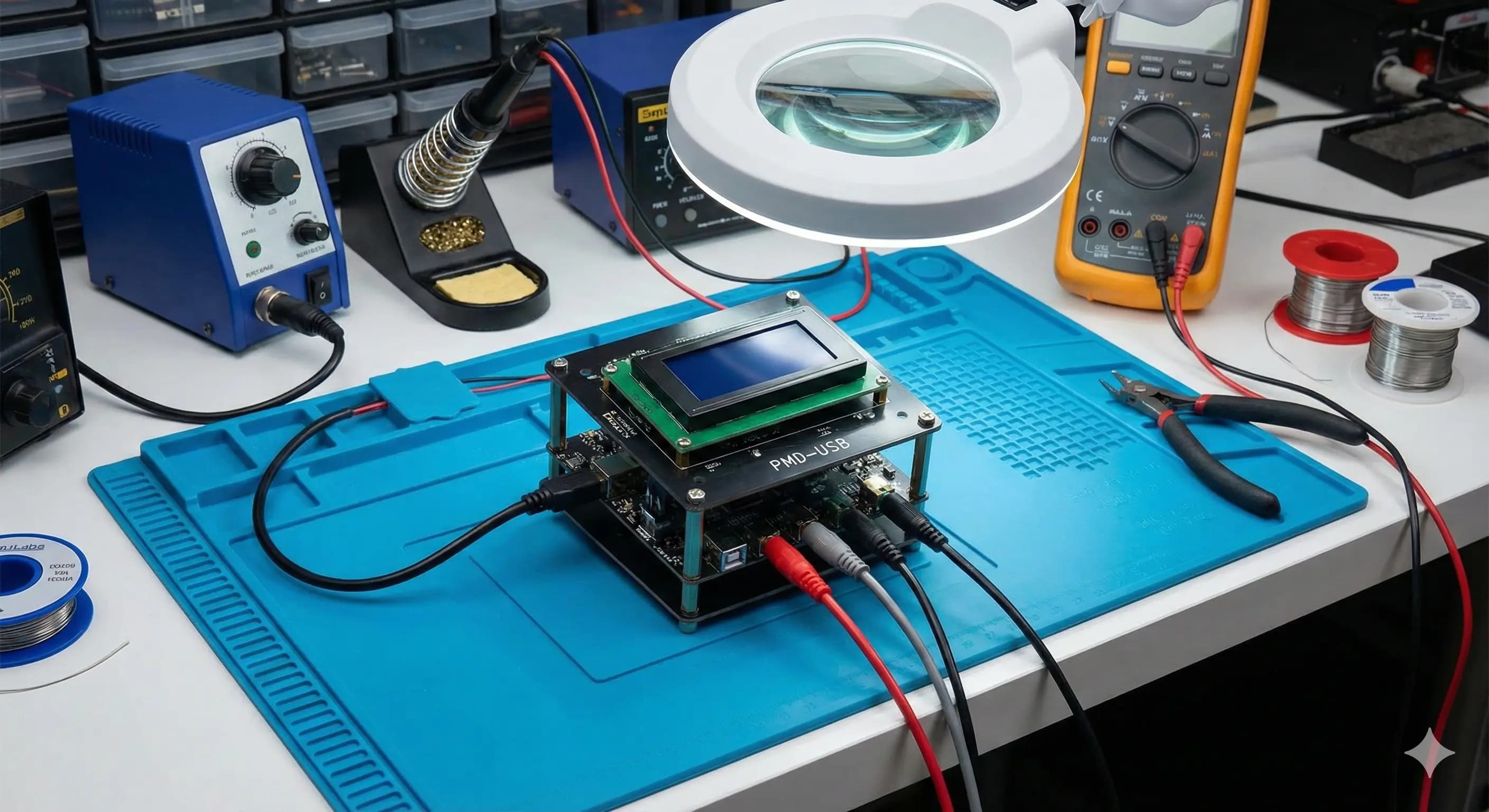
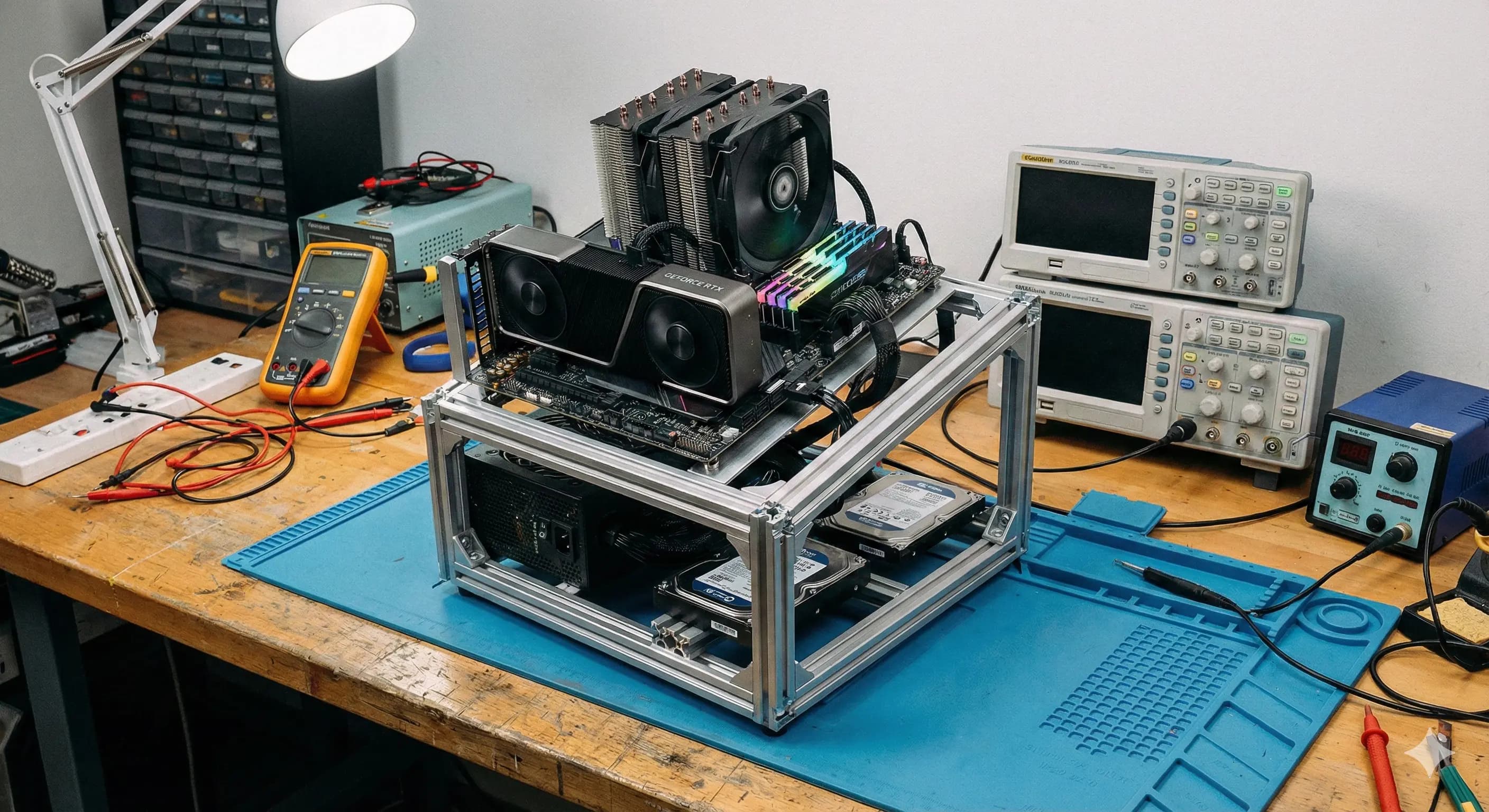
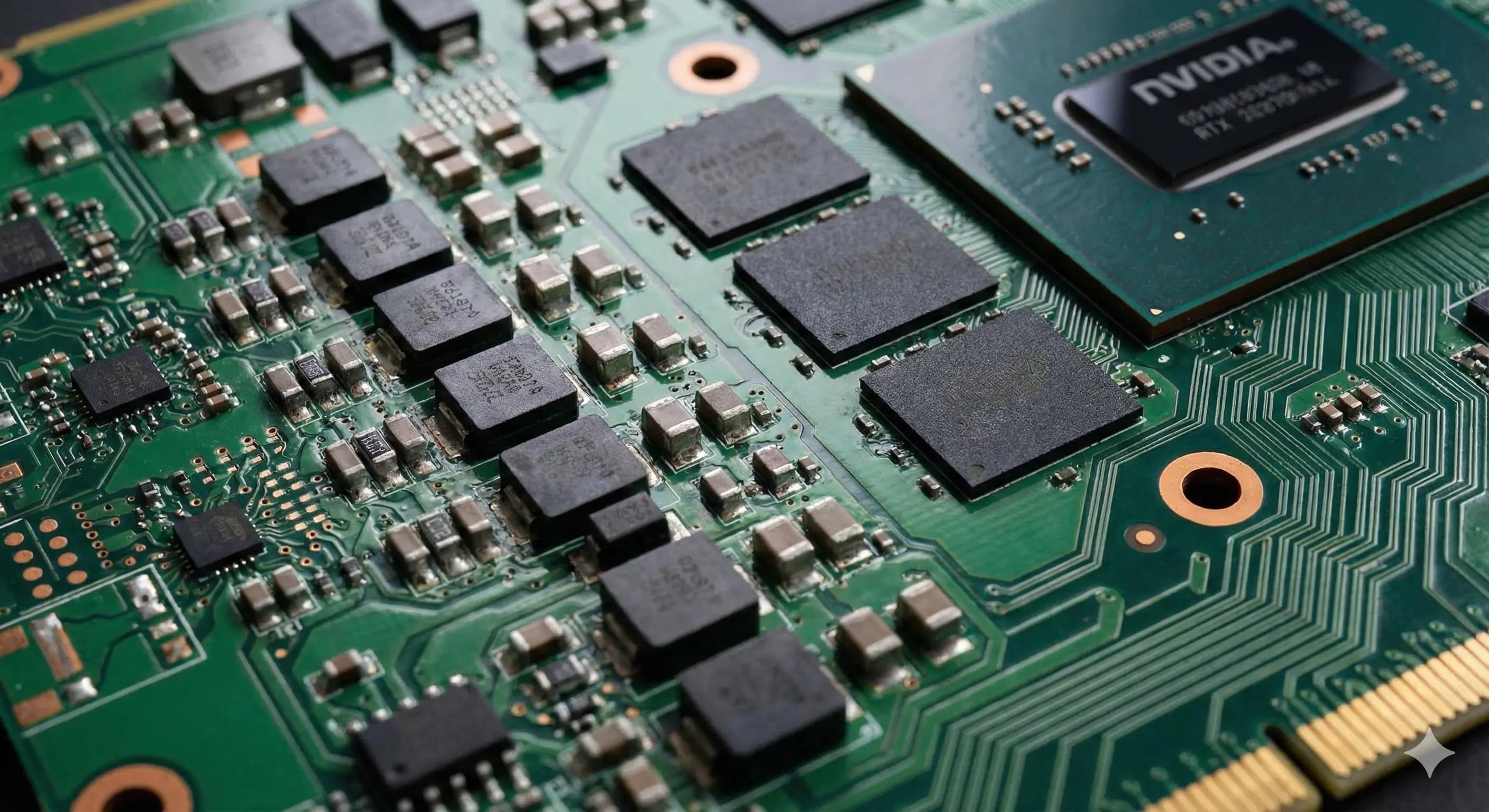
Zero-Bottleneck Infrastructure
Our primary test rig utilizes an AMD Ryzen 7 7600X seated on a Gigabyte B650 Gaming X AX V2. We eliminate CPU limitations to push 100% of the synthetic load directly onto the GPU silicon.
The 1,800-Second Thermal Soak
Standard shops run a quick FurMark test. We enforce a 30-minute absolute thermal soak to expose degrading memory pads, dried thermal paste, and hidden hotspot deltas.
Silicon DNA Authentication
We verify the physical core, memory modules, and vBIOS against our comprehensive intelligence registry to guarantee the card hasn't been flashed or modified.
Thermal Soak
Minimum sustained maximum load
Telemetry Points
Data points logged per audit
Voltage Rails
Micro-fluctuations monitored
CPU Bottleneck
Pure GPU silicon stress testing
Infrastructure Powered By

Certification Pricing
Transparent flat-fee pricing. No hidden costs. Includes insured two-way logistics within Pune.
Standard
The core audit suite. Perfect for mainstream and mid-range hardware validation.
- Physical & Electrical Triage
- Hardware SPI VBIOS Hash Check
- 1,800-Second Thermal Soak
- 1080p / 1440p Gaming Telemetry
- Permanent Digital Twin Registry
- 3–5 Business Day Turnaround
Premium
Extended compute diagnostics for high-value silicon. Recommended for top class hardware.
- Everything in Standard
- UHD 4K Gaming Telemetry
- Extended Game Suite
- AI Workloads: Stable Diffusion SDXL Tensor Test
- Creative and Streaming Benchmarks
- 2–3 Business Day Priority Queue
Frequently Asked Questions
Quick answers to our most common operational queries.
Engineering Journal
Hardware failure analysis, thermal degradation case studies, and engineering methodology from the lab.

Thermal Forensics: The Physics of Heat Transfer, Silicon Gradient Analysis, and the Hotspot Delta as a Primary Degradation Metric
Why core temperature is a trailing indicator of GPU health, how the Core-to-Hotspot delta encodes thermal interface material condition and heatsink integrity, and the physics of pump-out failure in GPU thermal systems.
The Smoothness Delta: A Forensic Engineer's Treatise on Frametime Statistics and Perceptual Fidelity
Why Average FPS is a statistically misleading metric, and how the mathematical relationship between 1% and 0.1% low frametimes constitutes the gold standard for diagnosing GPU health, VRM stability, and VRAM pathology.
Silicon DNA: The Physics of Clock States, Voltage Profiles, and V/F Curve Forensics
A deep-dive into how GPU boost algorithms, VRM phase topology, and silicon voltage-frequency curves encode the true electrical health of a pre-owned GPU — and how we read that data.